Is your business ready?
Every organisation faces constant change – from rapidly evolving technology and AI to government regulations and rising expectations from customers and stakeholders. I believe that simply reacting to change isn’t enough; businesses need a framework that helps them stay in control.
Advances in technology, including AI, are changing how decisions are made and how work is done. While these changes create efficiency and open up new opportunities, they also introduce risks around data management, information security, and process control. At the same time, government policies covering environmental management, health and safety, and sustainability are evolving faster than ever. Without a structured approach, keeping up and demonstrating compliance can quickly become a real challenge.
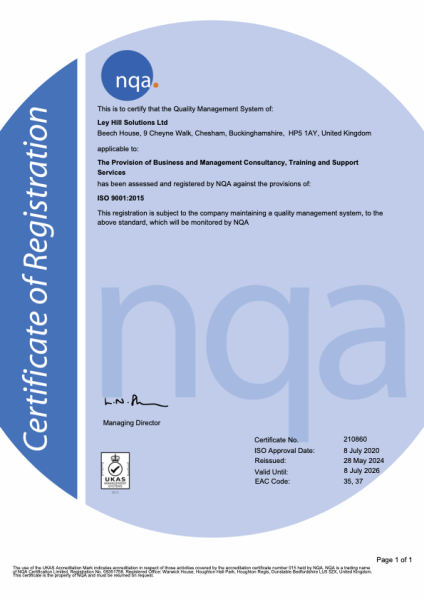
That’s why I look to ISO standards such as ISO 9001, ISO/IEC 27001, ISO 14001, and ISO 45001. They provide the structure needed to define processes, clarify responsibilities, assess risks, and implement consistent controls – making it possible to adopt new technology, respond to regulation, and manage risks in a controlled and measured way.
For me, the benefits of ISO standards go far beyond compliance. They help organisations:
- Identify and manage risks before they become problems
- Maintain service and quality levels during periods of change
- Ensure responsibilities remain clear
- Support informed, evidence-based decision-making
ISO standards build trust with customers, stakeholders, and regulators by providing independent assurance that systems are robust and operations are responsible. They’re not a one-off tick box exercise. Through regular audits, management reviews, and ongoing monitoring, organisations can adapt and improve continuously, no matter how the environment changes.
And this isn’t just theory, I’ve seen these benefits first-hand. I’ve worked directly with organisations to strengthen their management systems by helping them maintain, improve, and make sense of their processes during periods of transition. This has included supporting teams with risk registers, corrective actions, audit findings, nonconformities, and opportunities for improvement. When management systems are structured and well‑managed, they don’t just help organisations cope with change, they turn change into a powerful driver of operational control and improvement.
Change won’t wait, and neither should you. I encourage organisations to start preparing now. Follow Ley Hill Consultancy Group for insights, updates, and practical guidance on how ISO standards can help you stay in control and thrive in a changing world.
By Ria Daly
Quality Management Consultant @ Ley Hill Consultancy Group